
Algodoo for PC: Easy Physics Experiments Without Complexity
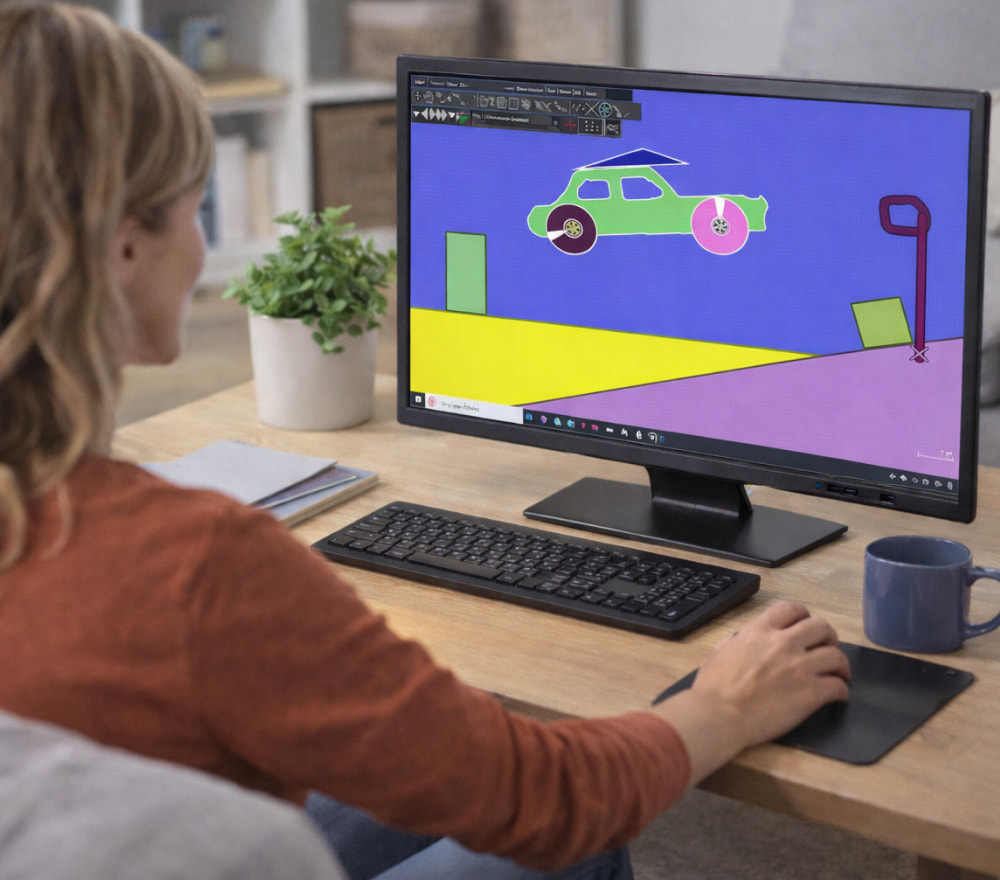
Play Algodoo Game for Free on PC
Download NowIf you like experimenting with physics in a playful way, Algodoo is a solid pick because it combines a sandbox mindset with surprisingly deep simulation tools. On a Windows computer, you can sketch shapes, assign materials, add joints, and watch gravity, friction, and collisions do the rest. It’s equally useful for quick “what if?” experiments and more deliberate classroom-style demonstrations.
What You Can Do With Algodoo on PC
At its core, the app lets you create scenes where objects behave according to physics rules, so you can learn by building. You can design ramps, gears, levers, fluid-like effects, and chain reactions, then iterate fast by tweaking parameters and replaying the result.
- Create mechanical builds such as catapults, cranes, and simple machines
- Explore motion concepts like momentum, torque, and elasticity
- Prototype puzzles and interactive “toy” simulations
- Use it for STEM lessons with visual, hands-on examples
For quick experiments, the Algodoo on PC experience feels natural because mouse-and-keyboard editing keeps scene building fast and precise.
Getting the Right Version and Staying Safe
Because software pages can be mirrored or reuploaded across the internet, it’s best to use reputable sources and verify what you’re downloading. Look for official publisher references or trusted distribution platforms, and avoid installers that bundle unrelated offers. If a download page feels suspicious, back out and choose another source.
A helpful habit is to scan the file with your antivirus and confirm the publisher signature (when available) before running any installer.
Download and Installation Walkthrough
Before you start, close heavy apps and ensure Windows is up to date, especially if you plan to run complex simulations. You’ll get a smoother experience if you keep graphics drivers current as well.
- Use our fan website and confirm you’re getting a compatible Windows build.
- Save the installer to a known folder (for example, Downloads), so it’s easy to find later.
- Run a quick security scan, then open the installer and follow the on-screen steps.
- Launch the program once installation completes, and try a small sample scene to confirm performance.
When you’re ready to begin, the Algodoo download for PC process is usually straightforward, and it only takes a few steps to get to your first working scene. To avoid confusion with multiple mirrors, it helps if you download Algodoo for PC from a consistent, reputable location, and then keep a copy of the installer for future reinstalls.
After you install Algodoo on PC successfully, create a simple test scene (like a ball rolling down a ramp) to confirm that gravity and collisions behave as expected.
Recommended PC Specs and Performance Tips
Algodoo can run on many everyday Windows machines, but scene complexity matters. If your build contains many objects, joints, or fast-moving collisions, you’ll want more headroom.
| Component | Comfortable baseline | Better for complex scenes |
|---|---|---|
| CPU | Modern dual-core | Recent quad-core or better |
| RAM | 4–8 GB | 8–16 GB |
| Graphics | Integrated GPU | Dedicated GPU for smoother rendering |
| Storage | Any HDD/SSD | SSD for faster loading |
- Reduce object count if frame rate drops during collisions.
- Lower visual detail in crowded scenes to keep motion smooth.
- Build in layers: test a small subsystem, then combine modules.
Learning Faster With Smart Scene-Building Habits
Algodoo rewards experimentation, but it’s even better when you build with intent. Start with a goal (a bridge that holds weight, a marble run that loops, a gear train that transfers motion), then adjust one variable at a time to see what changes.
- Use labels or consistent colors so you can track which parts are “structural” versus “moving.”
- Save versions (v1, v2, v3) so you can revert after a risky change.
- Measure outcomes by observing speeds, angles, and contact points rather than relying on guesswork.
For many hobbyists, an Algodoo PC game mindset makes learning feel effortless, because every failure becomes a quick iteration instead of a dead end.
Troubleshooting Common Issues
If something doesn’t work as expected, these checks solve most problems:
- Won’t launch: restart Windows, update graphics drivers, and try running as a standard user first.
- Laggy scenes: simplify the scene, reduce moving parts, or test in smaller sections.
- Objects behave oddly: review material properties, friction values, and joint constraints.
- Missing files or errors: reinstall cleanly and avoid mixing files from different sources.
Ideas to Try Today
If you want a quick start, build one of these small projects and iterate:
- A ramp with adjustable friction, comparing slide speed at different angles
- A pendulum with variable string length, testing how period changes
- A simple gear pair, then expand into a multi-gear transmission
- A chain reaction machine where each step triggers the next reliably
Once you get comfortable, you can push the simulation into more creative territory, combining art, motion, and physics into interactive scenes that are fun to share.